
Green fingers
from the start.
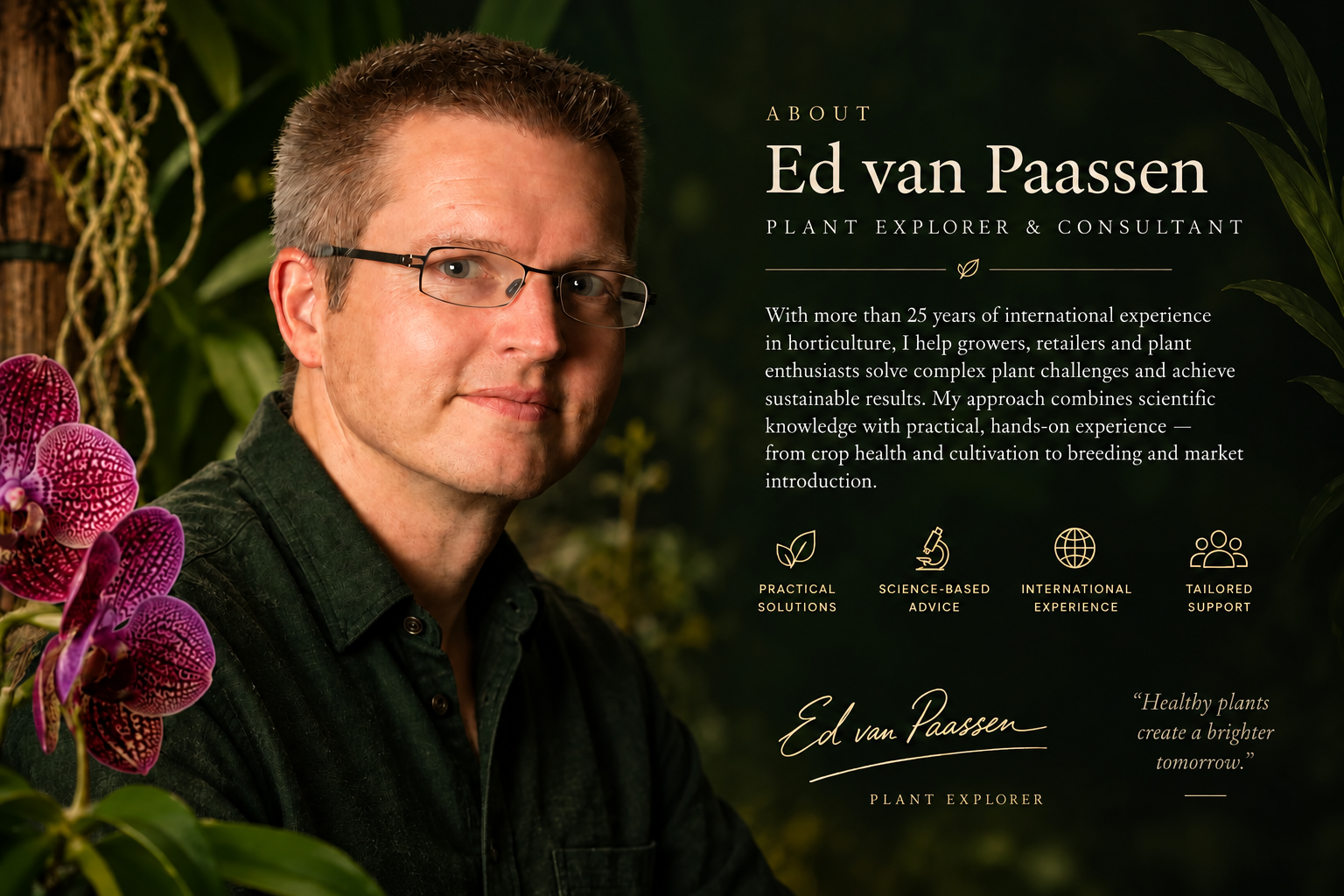
Born in 1973, I took an early interest in plants. I grew up with horticulture near the “City of Glass” Westland, west of Delft, where my parents ran a greenhouse nursery with tropical vegetables. In my spare time you could always find me in the greenhouse, growing plants and doing experiments.
Although my father grew vegetables, I was always especially drawn to ornamental plants: tropical orchids, bulbs, gingers and anything peculiar. That early fascination developed into a broad passion for plant variation, growth and development, biodiversity and practical use.
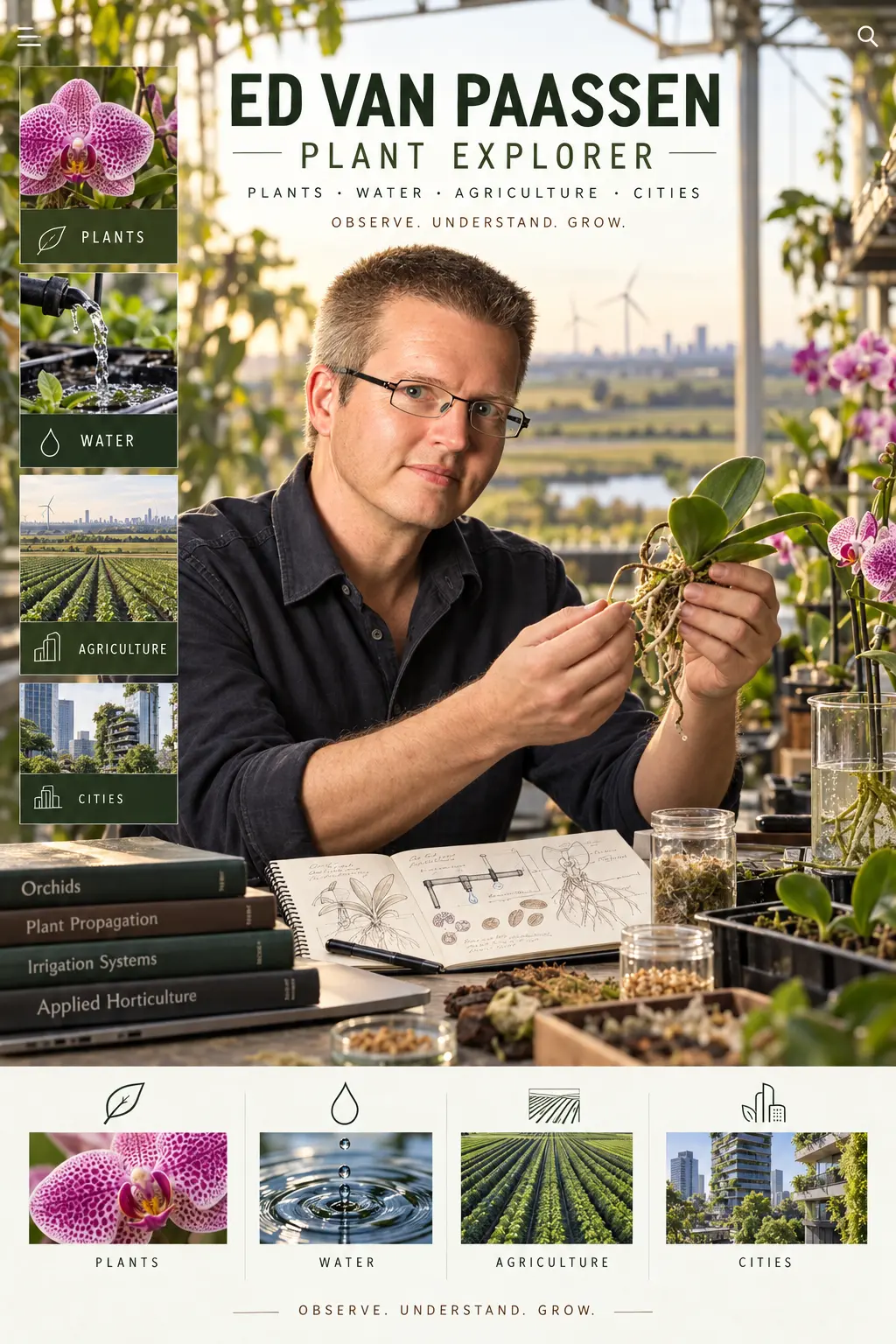
Observation is where good plant work begins — looking closely, asking what the plant is telling us, and connecting what we see to physiology, cultivation and environment.
Science and practice,
rooted together.
Glasshouse Horticulture
At Agricultural College Delft I studied Dutch glasshouse horticulture and built a network among horticultural production companies in the nearby Westland.
Plant Breeding
I specialised in Plant Breeding at Wageningen University, deepening my scientific knowledge. The combination gave me a lasting affinity with both science and practice.
Information & Digital
During my career I pursued part-time studies in Information Management & Services at The Hague University, alongside courses in web design, social media and new ways of working.
I worked for several companies in the Dutch planting-material reproduction sector in floriculture, primarily in classical plant breeding and micropropagation (plant tissue culture), in both R&D and production. I have worked with seed-propagated and vegetatively propagated plants, and across the major Dutch agricultural centres of Westland, Wageningen, Aalsmeer and Enkhuizen.
My crop experience spans vegetables, houseplants, cut flowers, garden plants, bulbs and tubers. After my career in the horticultural chain I co-founded Agro Internet, offering online services to SMEs in horticulture and agriculture.
Looking at the
whole plant system.
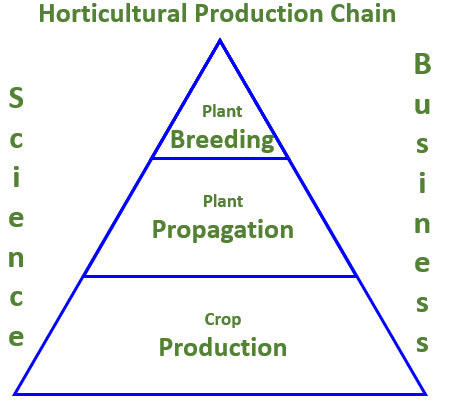
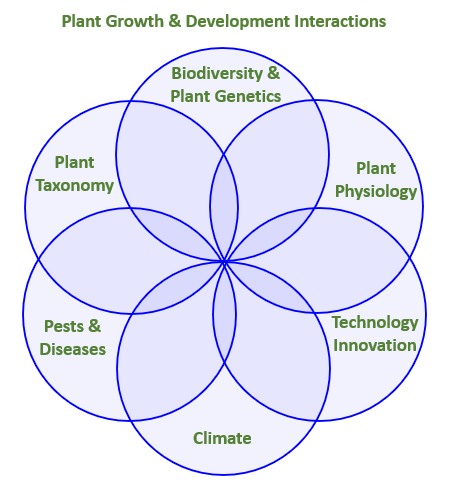
I understand the links in the plant production chain: from biodiversity and plant breeding to propagation, crop cultivation and post-harvest technology. A plant problem rarely belongs to just one discipline.
I approach questions from multiple angles: plant physiology, biodiversity and genetics, taxonomy, environment and technology. Their interactions matter — and so does the part of the plant below ground, which is often neglected.
An orchid and bamboo are very different plants, yet both are monocots and share physiological characteristics.
Young plants may need to form modified roots after a change in growing conditions. I saw the same adaptation principle in my parents’ cucumber nursery.
I do not pretend to replace a grower’s expertise. I act as a sparring partner: filling blind spots, finding missing links and tackling plant-technical problems that remain unresolved.
Good analysis depends on careful observation, an eye for detail, critical thinking and experience. Small variations within and between plants can confirm or refute a thesis.
Integrity matters. Especially for start-ups in a crucial phase, confidentiality is beyond price. I have never disclosed or shared client research.
Cases from the field.
These projects illustrate multidisciplinary troubleshooting: observing plant responses, connecting disciplines and translating findings into practical action.
Plant knowledge
with a purpose.
I want to work in a sustainable and responsible way, and I am eager to meet like-minded people around the globe. I share my know-how with both SMEs and non-profit organisations.
My plant expertise has applications in horticulture, biobased business, agricultural development work and green cities. The common thread is practical plant knowledge used to create healthier, more resilient systems.
Curiosity does not stop at the greenhouse door.
A visual record of
plants and practice.
Have a plant challenge
worth investigating?
Reach out for tailored advice or to discuss your plant and sustainability challenges.
Contact Ed →