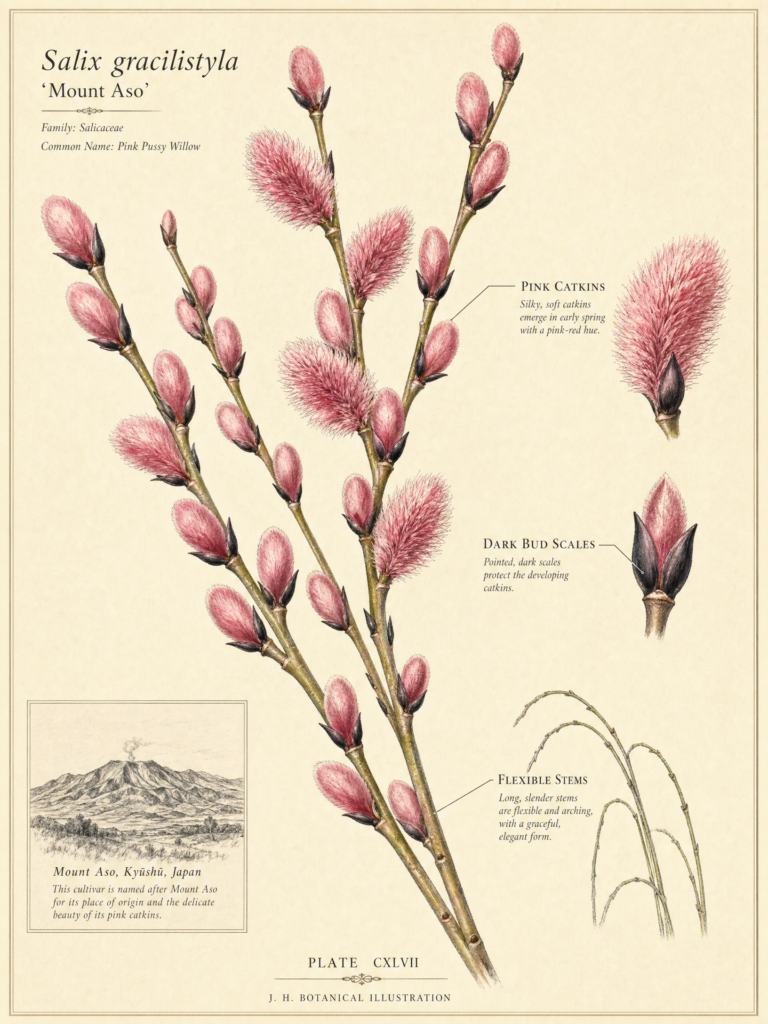
Fluffy pink catkins: so cute, and so hot. Everybody loves silky willow catkins. When you see them, you simply want to touch them. And here is the good news: they also come in a lovely pink-red. Moreover, the colour is 100% natural. No dye or paint is involved at any stage. When this article first appeared, pink catkins were still a rare novelty. Today, they are a spring staple in floristry — and a small star on social media too.
Why pink catkins charm every consumer
Pink catkins have the X-factor. In fact, they score on four fronts at once.
 The hug factor.
Catkins are more silky and fluffy than anything else in floriculture. So you want to stroke them, just like a white rabbit.
The colour of love.
Red and pink are the colours of love and warmth. Therefore, they fit Valentine’s Day like a glove.
 The cute factor.
The catkins are tiny, and that is exactly their charm. Like jewelry, they prove that small things can steal the show. It’s the number of catkins that counts.
A feast for the senses.
You look at them, and then you touch them. As a result, catkins fit perfectly in today’s experience economy. That also explains their success in reels and unboxing videos.
Why growers and florists love them too
 Perfect timing.
Willows naturally flower in early spring, around February. That is just before Valentine’s Day. Furthermore, cut branches store well in a cold room. So florists can stretch the sales window all the way to Mother’s Day. During these peak days, flowers sell on impulse and margins are higher.
Easy growing.
Tree nurseries will find Salix a friendly crop. Cuttings root easily. On most soils, the crop needs no fertiliser. It even thrives on wet, waterlogged ground and tolerates road salt. Meanwhile, the branches bring in extra income in early spring.
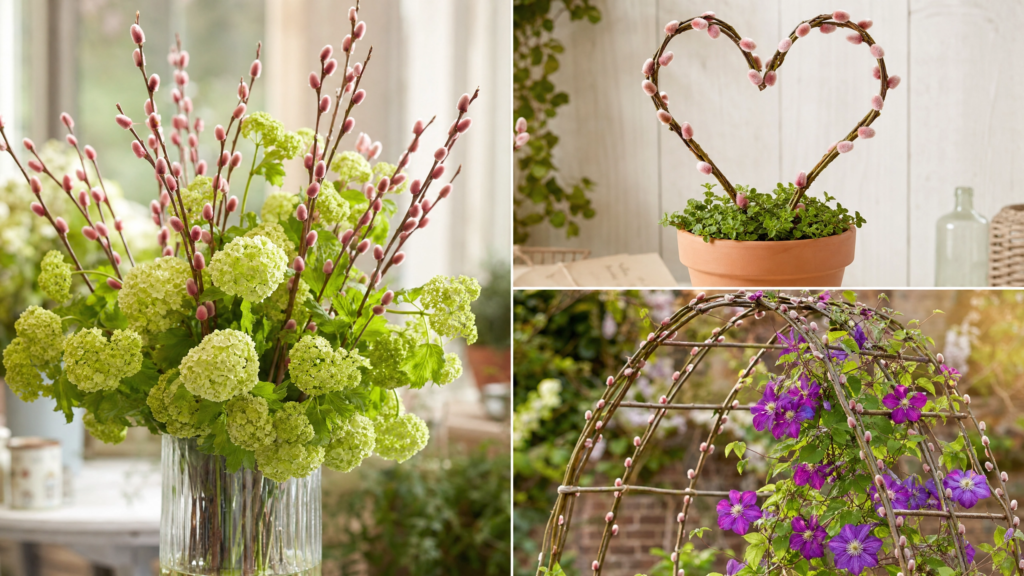
Inspiration: three ways to use them
Above the bouquet.
Long catkin stems that rise above a bouquet always catch the eye. The flexible stems also invite creative bending. For a fresh spring look, combine them with the pale green flowers of *Viburnum opulus* ‘Roseum’. That shrub, too, can be forced for early cutting.
Bent into a heart.
Salix stems are highly flexible. So bend two stems into a heart, as florists often do with bamboo. Add the heart to almost any potted garden plant. Suddenly, even a dormant plant becomes a fine gift for Valentine’s Day or Mother’s Day. Later, the receiver plants it in the garden. A quick dip of the stem ends in molten wax prevents unwanted rooting.
A trellis for clematis.
A sprouted willow can also support a climbing plant, such as Clematis. Choose a Clematis from pruning group 3, for example a *viticella* hybrid. Then you can prune both plants in the same season. Together, they make a great and easy pair.
The best cultivars with pink-red catkins
Two Japanese selections still lead the field. Both were picked by cut-flower growers for their colour:
Salix ‘Mount Aso’ — the famous “pink pussy willow”, with rich pink-red catkins
Salix ‘Mount Asama’ — its sister, with pink catkins from dark burgundy buds
One update on the name: these cultivars were first sold as *Salix chaenomeloides*. However, most nurseries now list them under *Salix gracilistyla*. Keep both names in mind when you search.
From trend watch to spring classic
This article once predicted that pink catkins would set the trend for spring. That prediction came true. In 2015, ‘Mount Aso’ was only available in dribs and drabs. Since then, growers have propagated it on a large scale. Today, florists order pink catkin branches every spring. Nurseries in Europe and North America sell the shrub to home gardeners as well. In peak season, it still sells out fast. So the advice stands, but with a twist: don’t wait to develop your pink catkin strategy — your rivals already have one.
Would you like a sparring partner with premium advice, independent and confidential? [Get in touch](https://edvanpaassen.nl/contact-me/), and tell me about the passion that drives your business.
Related articles on this site
The Intersection of Agriculture, Sustainability, and Innovation
Exploring Modern Agriculture: Sustainability and Expertise in Plant Sciences
Sources and further reading
Salix gracilistyla ‘Mount Aso’ — Gardenia.net plant profile
All warm and fuzzy about the world of willows — A Way To Garden