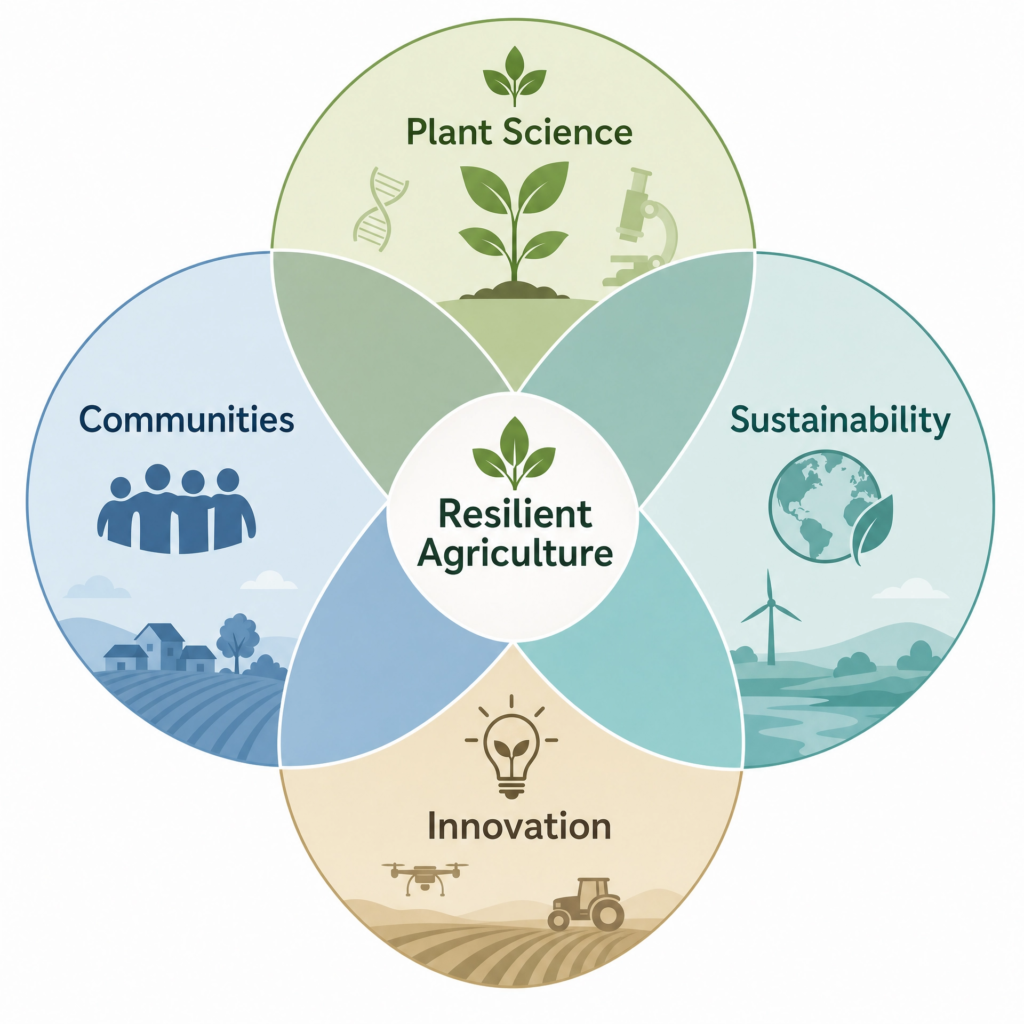
Farming is changing fast. Climate change, population growth and scarce resources all raise the stakes. Therefore, the sector needs experts who see the whole picture. Plants, people, markets and nature all connect. This article looks at farming through that wide lens.
Understanding modern agriculture
Good farming today draws on many fields at once. Crop protection, plant physiology and genetics each play their part. So does a feel for how plants respond to their environment. Plant breeding and horticulture tie these threads together. They help raise yields while keeping nature in balance. Solid training helps too. For example, an MSc in Plant Breeding and a BSc in Horticulture give an expert the depth to handle this complex field. That depth pays off in daily practice, for instance in plant technical troubleshooting for growers.
Sustainability: produce more, but responsibly
Sustainable farming is not just about producing more. It is about producing in a responsible way. In practice, that means circular systems that waste less and support wildlife. It also means smart use of raw materials, modern genetics and clean production. As a result, farms can meet today’s needs without harming those of tomorrow. That also keeps our food supply safe — the FAO calls this the heart of its sustainability agenda. In short, what is good for nature turns out to be good business as well.
Simple tools can make a big difference here. Think of the Water Pyramid, which makes drinking water from sunlight. Or think of contour trenching, which regreens dry land with nothing but ditches.
Communities and shared knowledge
New ideas only land when people carry them. Growers, breeders, traders and consumers shape the food system together. Here the independent expert comes in: the knowledge broker. Such an expert turns science into practice. He or she also connects parties who would not otherwise meet. Moreover, knowledge flows both ways. Local growers hold practical wisdom that researchers need. When communities share what they know, the whole chain grows stronger. The Waterboxx story shows how far that can go: one invention, carried by farmers in 55 countries.
Global markets and new regions
Farming crosses borders. Rising markets, such as the BRICS countries, ASEAN, Latin America and Africa, matter more every year. Each region brings its own crops, challenges and chances. Trade fairs like HortEx Vietnam and the Asia Flower Expo show how lively these markets are. At the same time, fragile regions need support first — Sudan’s food crisis makes that painfully clear. Meanwhile, demand for sustainable products keeps growing worldwide. Consumers ask for it, and rules require it. Experts with experience abroad can therefore adapt methods to each region. By blending local knowledge with global trends, they help build strong farming systems everywhere.
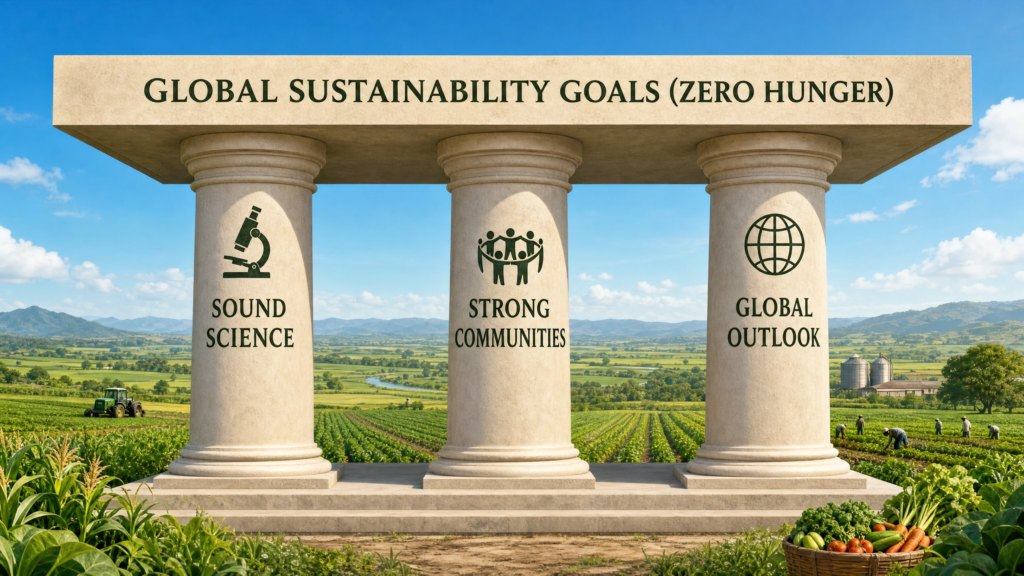
Three pillars, one roof: science, communities and a global outlook carry the sustainability goals.
Looking ahead
The future of farming rests on three pillars: sound science, strong communities and a global outlook. Together, they carry the world’s sustainability goals, including zero hunger. Keep learning, and keep working in diverse settings — that is what feeds all three. So the holistic view is not a luxury. It is how daily practice meets those global goals: one crop, one community and one idea at a time.
Curious what this means for your business? Read more about me or get in touch for independent and confidential advice.