A street tree needs more than a larger opening in the pavement. It needs a sufficiently large connected volume of uncompacted, aerated, drainable soil that roots can actually occupy. Small isolated pits, compacted subsoil, underground utilities and sealed paving can restrict root development, water storage and gas exchange. Designing the root zone as infrastructure—from the beginning—gives an urban tree a much better chance of reaching maturity and delivering the cooling, shade, stormwater and biodiversity benefits for which it was planted.
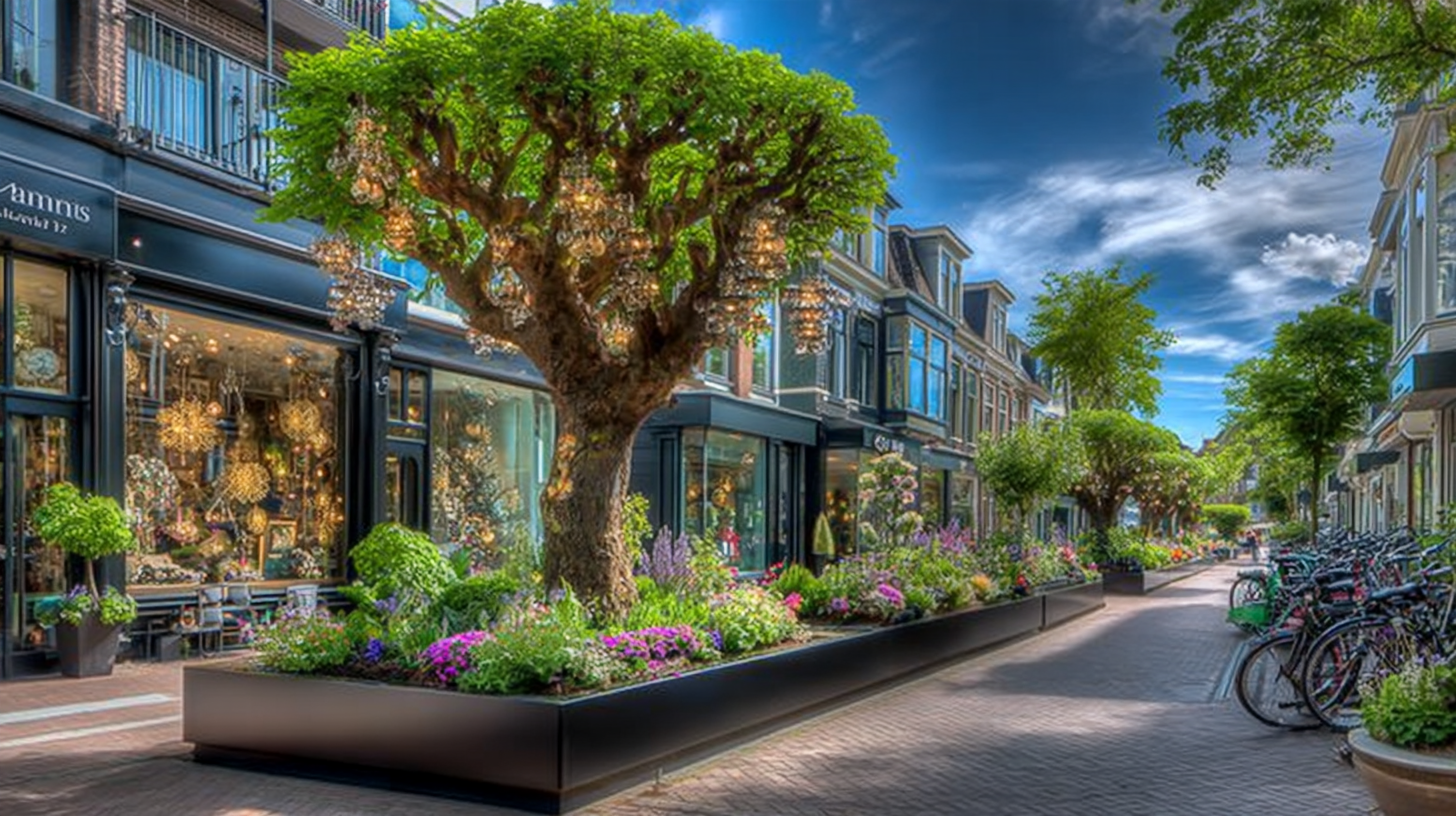
Why do apparently well-planted street trees sometimes fail?
Walk through almost any city and you can find the pattern. A young tree arrives from a nursery in good condition. It is planted neatly, supported, watered and surrounded by new paving. For the first years, everything appears successful.
Then growth slows. The crown becomes sparse. Leaves become smaller. Drought symptoms appear quickly in summer. Irrigation seems to disappear without producing lasting improvement.
We often start looking at the tree. I start by looking under the pavement.
An urban tree is a large perennial plant being asked to survive in what can effectively become a very small container. The difference is that we cannot see the container.
What does soil compaction do to a tree?
Roots need three things from soil simultaneously: water, oxygen and physical space.
Compaction changes the pore structure of soil. As porosity and especially larger air-filled pores are reduced, root penetration, gas exchange, infiltration and drainage can all become more difficult.
This creates an interesting contradiction. Urban engineers often need highly compacted material beneath pavements because pavements must carry loads without subsiding. Trees need almost the opposite. Their roots need soil structure that allows biological growth.
So the question is not simply: How large should the tree pit be?
It is: How do we provide load-bearing urban infrastructure and biologically functional rooting soil in the same place?
That is a design problem.
Is the visible tree opening the same as the root zone?
No.
The small square of exposed soil around a street tree tells us almost nothing about how much useful soil exists underground. Roots naturally explore soil horizontally. Pavement, foundations, utility corridors, compacted road bases and underground structures can all interrupt that expansion.
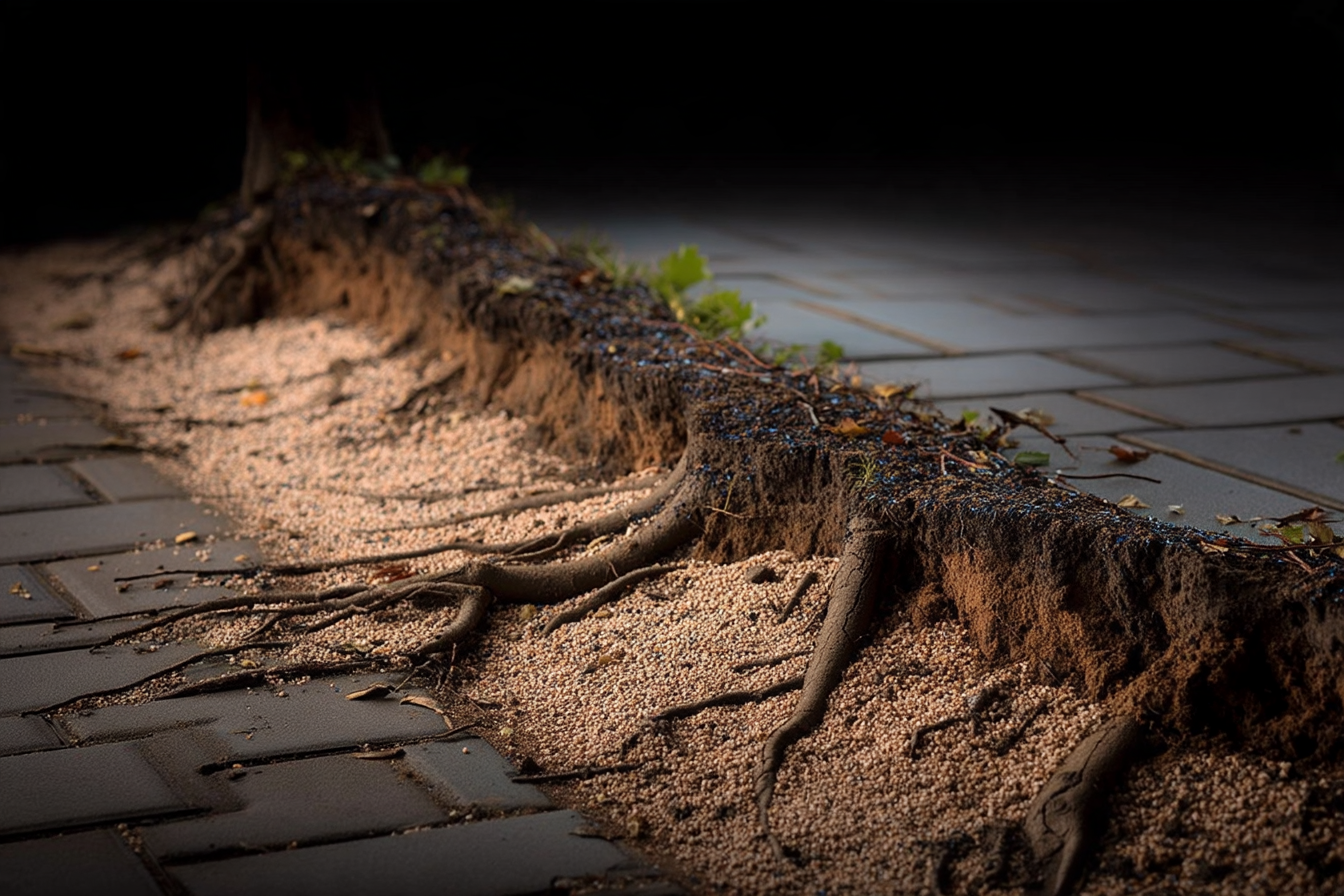
Technical guidance on stormwater trees identifies inadequate soil volume as a major reason for poor street-tree performance and recommends substantially greater soil provision than the small pits traditionally seen along streets.
I would, however, avoid treating any universal number of cubic metres as a magic threshold. Species differ. Climate differs. Soil differs. Water availability differs. Expected mature canopy size differs.
A better principle is: Design the below-ground growing environment for the mature tree you expect above ground.
Why is connected soil particularly valuable?
Imagine giving a tree several small pockets of good soil separated by dense construction material. The total calculated soil volume may look respectable on a drawing. Biologically, however, it may behave very differently from one continuous rootable zone.
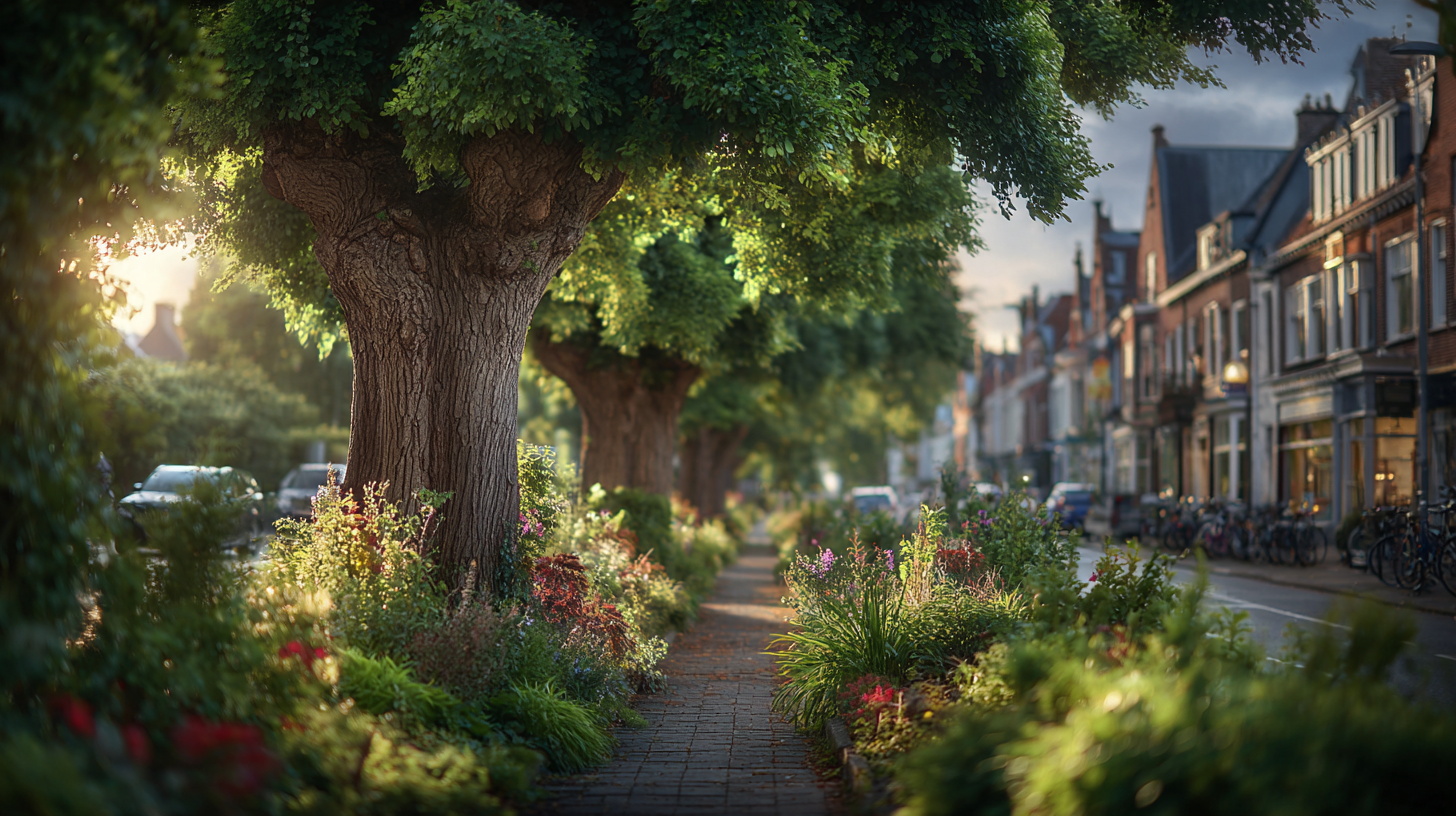
This is why continuous planting strips and connected tree trenches can be so useful. Roots can explore a larger soil reservoir, and neighbouring trees may share a broader below-ground environment rather than each being trapped in an isolated pit.
Where pavement must remain above that space, engineered approaches such as suspended pavement systems can allow pavement loads to be supported while retaining rootable soil underneath.
That is where horticulture and civil engineering become one system.
Can the root zone also manage stormwater?
Yes—but only if we design it carefully.
Tree soil is not merely an anchoring medium. It can store water, support infiltration and supply water for later transpiration. Tree crowns also intercept rainfall before it reaches the ground. Together these processes can reduce and delay stormwater runoff.
The same soil volume can therefore perform several urban functions when it is designed as living infrastructure: it can provide rooting space, receive stormwater, temporarily store water, support biological soil processes, and allow the tree to return part of that water to the atmosphere through transpiration.
But isn’t more stormwater always better for a tree?
No.
This is where green-infrastructure enthusiasm can get ahead of plant physiology.
Roots need water. Roots also need oxygen. If a tree pit receives runoff but drains poorly, prolonged saturation can reduce oxygen availability around roots. Dense or sealed soils can therefore create both extremes: drought during dry periods and oxygen stress after rainfall when infiltration and drainage are impaired.
So connecting a tree to stormwater is not simply a matter of directing a drainpipe toward it. You need to understand infiltration rate, drainage, soil texture and structure, expected runoff volume, groundwater conditions, tree species, root-zone depth and drought periods between rainfall events.
That is why I prefer the term water management to “watering.” We are managing an alternating supply of water and oxygen in a biological system.
What should be checked before a street tree is planted?
I would examine the site from below ground upward.
First, identify the real rootable volume, not merely the dimensions shown for the planting opening. Then ask where the roots can expand when they leave the original root ball.
Check whether surrounding soil has been compacted during construction. Locate utilities and foundations. Understand drainage. Determine where irrigation or rainfall will enter the root zone and where excess water can leave it.
Then look at the nursery tree itself. Root-system problems can already be present in supplied trees, including poorly developed roots, girdling roots and structural roots buried too deeply in the root ball.
A beautifully engineered planting site cannot completely compensate for a badly structured root system. Nor can an excellent nursery tree compensate for a hostile soil environment. We need both.
Why does this matter for climate adaptation?
Because cities do not really need newly planted trees. They need large, functioning mature trees.
The environmental services we want—shade, canopy cooling, rainfall interception, habitat and substantial evapotranspiration—develop as trees establish and increase in size.
Planting numbers alone can therefore be misleading. Ten trees that survive and develop large healthy crowns may ultimately contribute more than many trees repeatedly planted into sites where they cannot mature.
The real question should be: What will this tree look like here in twenty or thirty years?
And then: Have we built the underground environment that makes that possible?
The Plant Explorer field lesson
When I look at an urban tree, I do not see a trunk placed in a pavement opening.
I see a living hydraulic system.
Leaves lose water to the atmosphere. The trunk transports it. Roots must replace it. Soil must store it. Soil pores must also deliver oxygen. Microorganisms operate around those roots. Rainfall enters—or fails to enter—the system. And beneath all of that sit cables, pipes, foundations and compacted construction layers.
That is why successful urban planting requires an Explorer–Scientist–Practitioner approach.
Explore what is actually beneath the street. Understand the physiology and soil physics. Then design something that can be built, maintained and lived with.
A city tree begins above ground. A successful city tree is designed below it.
Key takeaways
- The visible tree pit is not necessarily the tree’s usable rooting volume.
- Soil compaction can restrict root penetration, aeration, infiltration and water availability.
- Rootable soil should be considered alongside expected mature tree size rather than using one universal soil-volume number.
- Connected soil zones or tree trenches can offer roots more useful growing space than isolated pits.
- Tree-root zones can contribute to stormwater management, but drainage and oxygen supply remain essential.
- Nursery root quality, planting depth and root architecture matter as much as the urban soil design.
- Climate-resilient urban forestry should focus on creating conditions in which trees can reach maturity, not simply maximizing planting counts.
Explore related Field Notes
For the broader context, read Green Cities: Designing Urban Environments That Can Grow. The plant-physiology perspective continues in Plants: Understanding Growth as a Complete System, while Water: Smarter Irrigation and Drought Resilience explores the water-management side. For the value of established canopy, see Climate Change and Sustainability: The Role of Trees in Urban Landscaping.
Sources and further reading
- US EPA — Stormwater Trees
- US EPA — Stormwater to Street Trees: Engineering Urban Forests for Stormwater Management
- Korbik, Swoczyna & Latocha (2025) — Pre-Planting and Planting Factors and Practices Affecting Urban Tree Growth
- Löwe (2026) — Soil Loosening of Compacted Urban Tree Sites Using a Pneumatic Lance Injector
Planning trees for a street, public space, development or landscape?
Do not start with the planting hole. Start with the mature tree, then work downward through roots, soil, water, oxygen and infrastructure.
Explore more Field Notes from Ed van Paassen, Plant Explorer, or get in touch to discuss a planting, soil, water or horticultural challenge.