Cities feel climate change first. To begin with, summers grow hotter and cloudbursts grow heavier. Meanwhile, most cities are covered in stone, asphalt and bare roofs. That is a problem, but also an opportunity. After all, every flat roof is unused space. However, cover it with plants, and it starts working for the city. In short, this art.
Two types of green roof
Green roofs come in two main forms. First, there is the extensive green roof: the light version. It carries a thin layer of soil, 4 to 15 cm, planted with sedum, herbs and grasses. Moreover, it needs little care and fits most existing flat roofs. Second, the intensive green roof is a true roof garden. With 15 to 100 cm of substrate, it can carry perennials, shrubs and even trees. In return, it needs a stronger roof and more maintenance. In addition, hybrid forms exist between these two — for example blue-green roofs, which store extra rainwater on purpose.
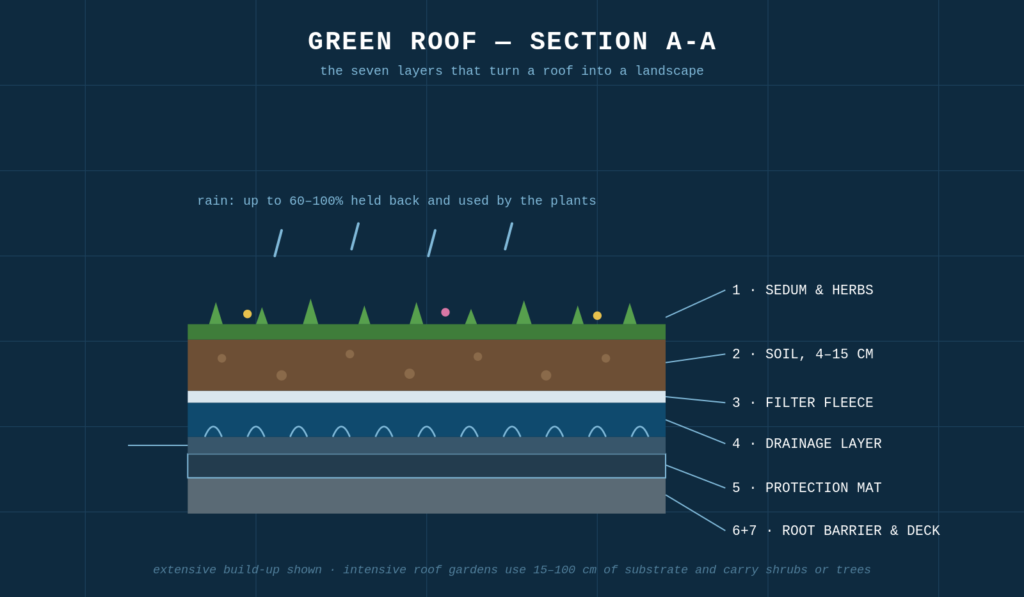
Cooling the urban heat island
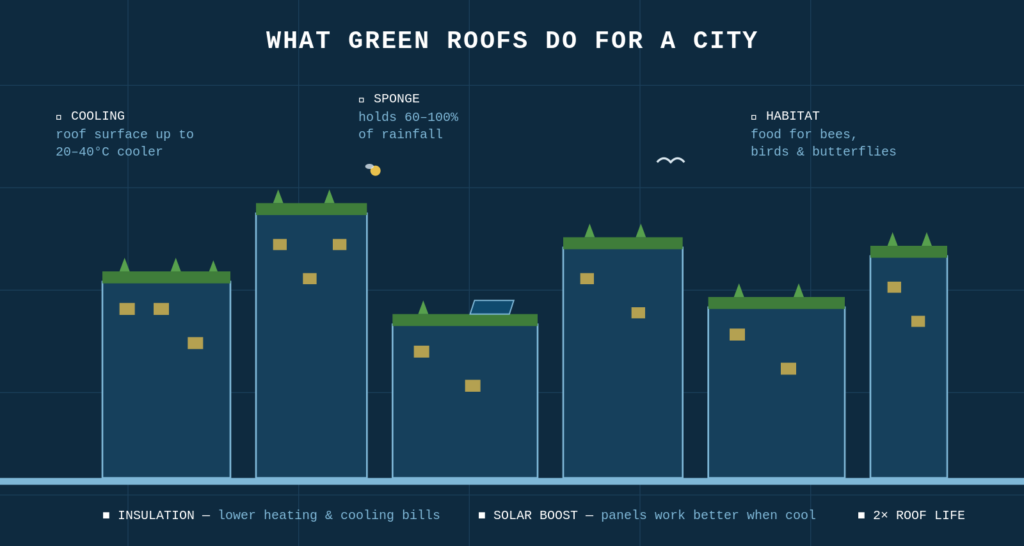
ities are heat islands. Dark roofs and paving absorb the sun all day, then radiate heat all night. However, green roofs break that cycle. The plants shade the surface; at the same time, their evaporation cools the air. As a result, a green roof surface can stay tens of degrees cooler than a bare black roof, according to the US EPA. Scale that up across a district, and the air itself cools as well. In fact, recent research shows city-wide green roofs both save energy and soften the local climate.
A sponge for cloudbursts
Heavy rain is the other urban headache. Sewers overflow, and streets flood as a result. In this case, green roofs act as a sponge. The soil and drainage layer hold 60 to 100 percent of the rain that falls on them, depending on the type of roof. The plants then use or evaporate that water later. Consequently, the peak load on the sewer drops sharply. Likewise, contour trenching applies the same principle in dry regions: hold the water where it falls, instead of letting it race away.
Biodiversity above street level
A sedum roof in bloom is a fuel station for bees, butterflies and other insects. Add herbs and native grasses, and then the birds follow. Moreover, in dense cities rooftops can form stepping stones between parks. So green roofs do for the city what hedges do for farmland: they connect habitats. Indeed, that fits the wider story of a holistic view on agriculture and communities — green systems work best when they link up.
The business case
Green roofs also earn their keep. For example, the extra layers protect the waterproofing from sun and frost, which can roughly double the life of the roof. The soil insulates, so heating and cooling bills drop. Solar panels even perform better on a green roof, because the plants keep the panels cool. Furthermore, many cities now support green roofs with subsidies or require them on new buildings. For instance, Basel, Toronto and — since 2019 — New York City all demand or reward them.
Getting started
Thinking about a green roof for your home, office or nursery? Then start with three checks. First, have the load-bearing capacity of the roof checked. Second, match the plant choice to your climate and roof: sun, wind and slope all matter. Third, ask your municipality about subsidies. Finally, for advice on plant choice and biodiversity in urban projects, feel free to get in touch — green cities are part of my services.
Watch green roofs in action
Installing a Sempergreen sedum roof — a Dutch supplier shows how fast an extensive green roof goes down
Green roof construction time-lapse — Victoria University’s demonstration roof, from bare deck to living landscape
Green cities are our biggest climate challenge — Bloomberg Green on the bigger picture
Related articles on this site
 A Holistic View on Agriculture, Communities, Sustainability and Innovation
Contour Trenching: Just Dig, and the Desert Turns Green
The Waterboxx: Growing Trees in the Desert with Dew and Rain
Sources and further reading
US EPA — Using Green Roofs to Reduce Heat Islands
Nature Cities — Green roofs save energy in cities and fight regional climate change